I used to think emotional wellbeing was something you dealt with when things fell apart. A breakup, a loss, a bad year. Something you reached for in a crisis and forgot about the second life felt normal again.
It took me way too long to realize that's backwards. Emotional wellbeing isn't the thing you fix when everything else breaks. It's the thing that decides whether everything else breaks in the first place.
And for women specifically, this isn't some soft, secondary concern. It's foundational. It shapes how we show up at work, how we parent, how we love, how we handle the ordinary chaos of a Tuesday. Yet it's usually the last thing on the list, right after everyone else's needs and just before we run out of hours in the day.
Why women carry this differently
Women are often the emotional infrastructure of everyone around them. The one who remembers the birthdays, senses when a friend is off before she says anything, holds the family's stress without being asked to. That role is real, and it matters. But it also means women spend enormous amounts of energy managing everyone else's emotional state while quietly neglecting their own.
There's also the expectation to keep it together. To be capable, warm, composed, endlessly available. Somewhere in there, a lot of women learn to treat their own feelings as a problem to manage privately rather than something worth tending to openly. We get good at looking fine. Being fine is a different thing entirely.
Add to that the actual biological and social realities. Hormonal shifts across the menstrual cycle, pregnancy, postpartum, perimenopause. Wage gaps and career penalties that still show up for women who take time for caregiving. The mental load of running a household that rarely gets split evenly, even in relationships that look equal on paper. None of this is imagined. It's a real, cumulative weight, and it makes emotional wellbeing not a luxury but a necessity.
What emotional wellbeing actually means
It's not the same as being happy all the time, and it's not the absence of hard feelings. Emotional wellbeing is closer to having the capacity to feel what you feel, understand where it's coming from, and move through it without it running your whole life.
It looks like being able to say "I'm not okay today" without spiraling into guilt about saying it. It looks like recognizing burnout before it becomes a breakdown. It looks like having people around you who you don't have to perform for.
Emotional wellbeing also isn't a solo project, even though it's often marketed that way. Journaling and self-care routines help, but they can only do so much without real human connection backing them up. Feelings need somewhere to go. A private practice matters, but it was never meant to replace being known by other people.
The cost of ignoring it
When emotional wellbeing gets pushed aside long enough, it doesn't just disappear. It shows up somewhere else. Chronic fatigue that sleep doesn't fix. Irritability that seems to come out of nowhere. Physical symptoms with no clear cause. Relationships that feel distant even when nothing's technically wrong.
Women are more likely than men to be diagnosed with anxiety and depression, and while there are many contributing factors, chronic emotional neglect, the kind that comes from constantly putting yourself last, is one of them. It's not weakness. It's what happens when a need goes unmet for long enough.
What actually supports it
There's no single fix, but a few things consistently make a real difference.
Naming what you feel, out loud, to someone. Not journaling it in private and leaving it there. Actually saying it to another person who can hold it with you.
Protecting time that isn't productive. Rest that doesn't need to be earned. Time that isn't optimizing anything, just existing.
Having at least one space where you don't have to perform. Somewhere the composed version of you can take a break, and the honest version gets to show up instead.
Moving your body regularly. Not as punishment or a size goal, just as a way of processing stress that words alone don't fully clear out.
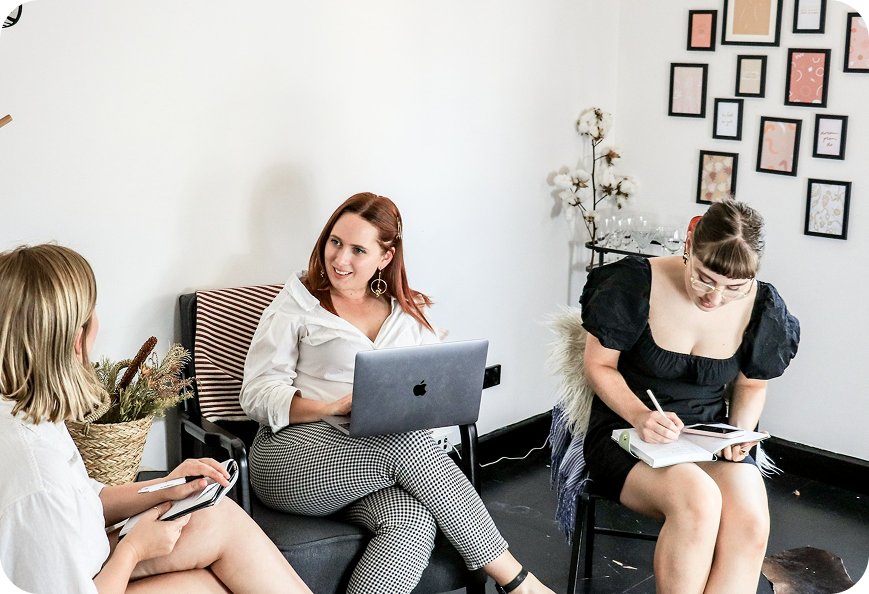
Surrounding yourself with women who understand the specific weight you're carrying. Not everyone needs the full explanation. Some people just get it, and that alone lightens the load.
Getting support before it's an emergency. Therapy, coaching, or just a consistent, honest friendship. Waiting until things are unbearable makes the climb back so much longer than it needs to be.
None of these are dramatic. They're small, repeatable things. But repeated often enough, they add up to something that actually holds.
FAQ: Emotional Wellbeing for Women
1. What is emotional wellbeing, exactly? It's the ability to feel and understand your emotions without being overwhelmed by them. It's not about being happy all the time.
2. Why is emotional wellbeing especially important for women? Women often carry extra emotional labor for others, plus specific biological and social pressures, which makes their own wellbeing easy to neglect.
3. What are signs that emotional wellbeing is being neglected? Chronic fatigue, irritability, feeling disconnected in relationships, or physical symptoms with no clear medical cause are common signs.
4. Can self-care alone improve emotional wellbeing? It helps, but it usually isn't enough on its own. Real connection and support from other people make the biggest difference.
5. How does community support emotional wellbeing? Being around people who understand your specific experience reduces the pressure to explain everything and makes it easier to be honest.
6. When should someone seek professional support for emotional wellbeing? If low mood, anxiety, or exhaustion are persistent and affecting daily life, it's worth talking to a professional rather than waiting it out.
You don't have to hold it all yourself
Emotional wellbeing isn't a solo project, and it was never supposed to be. It grows through real connection, honest conversation, and spaces where you're allowed to just be a person instead of everyone's steady one.
That's what Seasons is built for. A community where women can show up as they actually are, find groups and conversations that get it, and build the kind of support that makes the hard days lighter and the good days fuller.
Join the Seasons Women Community
🌐 Website: https://seasonswomen.com
📱 Download the app:
🍎 iOS: https://apps.apple.com/us/app/seasons-women/id6777904372
🤖 Android: https://play.google.com/store/apps/details?id=com.seasonswomen